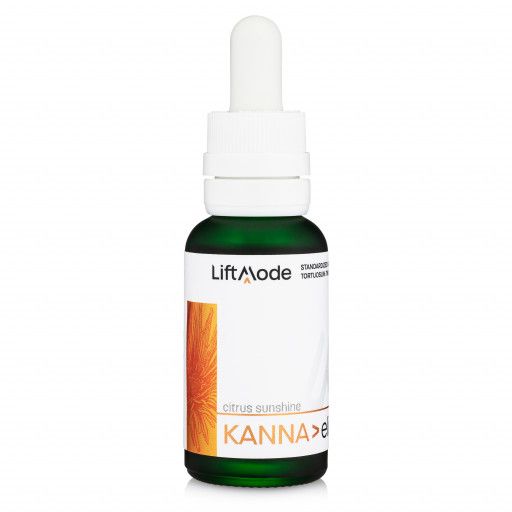
Kanna — known botanically as Sceletium tortuosum — is a small succulent from South Africa that has spent the last decade moving from ethnobotanical obscurity into the mainstream of mood and nootropic supplementation. If you have been searching for a natural way to support a calm, positive, socially-at-ease state of mind, kanna has almost certainly crossed your path.
This guide goes deeper than the typical product page. We cover where kanna comes from, the specific alkaloids responsible for its effects, what controlled human studies have actually measured, how to choose between extract types and delivery formats, sensible dosing, and the safety considerations that genuinely matter. Where claims are made, we point to the published research behind them.
Educational use only. This article is for general education and is not medical advice. Kanna affects serotonin signaling; if you take any prescription medication — especially antidepressants — talk to a qualified healthcare professional before using it.
Part 1: What Is Kanna? History and Origins
The plant itself
Sceletium tortuosum is a low-growing, ground-hugging succulent adapted to the arid Karoo and Namaqualand regions of South Africa. It is visually unremarkable — its significance lies entirely in its chemistry, specifically a family of mesembrine-type alkaloids concentrated in the plant's aerial parts.
Traditional use
The name "kanna" (also spelled channa or kougoed, the latter meaning "chewable things") comes from the Khoisan peoples of Southern Africa, who used the plant long before written records. Documented European observations date to the late 17th century, and the traditional preparation involved crushing and fermenting the plant material to mellow its effect and improve palatability. Communities chewed the fermented material, used it as a snuff, or brewed it as a tea to ease tension, lift mood, and promote sociability — and reportedly to blunt hunger and thirst on long journeys.
Modern rediscovery
Serious pharmacological investigation began in the late 1990s and accelerated through the 2000s and 2010s, as analytical chemistry made it possible to standardize extracts to specific alkaloid levels and as the first randomized human trials were published. Today kanna sits in a relatively rare category: a traditional botanical whose proposed mechanisms have been tested in controlled settings.
Part 2: How Kanna Works — The Science Behind the Plant
The key alkaloids
Kanna's activity comes from a group of mesembrine-type alkaloids, principally mesembrine (the most abundant and best-studied, and the main driver of kanna's mood and stress-related effects), mesembrenone (a notably potent contributor to the PDE4-inhibiting activity described below), and the secondary alkaloids mesembrenol and mesembranol, which round out the extract's overall profile. The ratio of these alkaloids — not just the total amount — shapes how a given extract feels, which is why standardization matters so much (more on that in Part 8).
Two complementary mechanisms
What makes kanna pharmacologically distinctive is that its alkaloids act on two targets at once — a profile confirmed in laboratory pharmacology studies of Sceletium extracts [1][2]:
Serotonin Reuptake Inhibition (SRI)
Mesembrine is a potent inhibitor of the serotonin transporter (SERT) [2]. By slowing serotonin's reabsorption, kanna lets this mood-regulating neurotransmitter remain active in the synapse longer. This is the same broad target as prescription SSRIs, but kanna's action is comparatively mild and is paired with a second mechanism rather than acting alone.
Phosphodiesterase-4 (PDE4) Inhibition
Kanna's alkaloids — mesembrenone especially — inhibit PDE4 [1][2]. PDE4 inhibition raises intracellular cAMP, a signaling molecule involved in cognition, alertness, and cellular communication. This dual SRI + PDE4 profile is unusual among natural products and is thought to underlie kanna's combination of mood support and mental clarity.
What human studies have measured
Mechanism is one thing; effects in people are another. Several controlled studies of standardized Sceletium extracts are worth knowing about:
- In a functional MRI study, a standardized extract reduced the reactivity of the amygdala — a brain region central to the threat/stress response — to fearful stimuli, and altered amygdala–hypothalamus connectivity, consistent with an anxiolytic-like (tension-reducing) signature [3].
- A randomized, double-blind, placebo-controlled trial in healthy adults reported the extract was well tolerated over nine weeks and pointed to improvements in measures of mood and subjective well-being [4].
- A proof-of-concept randomized trial found changes in cognitive performance (including executive function and attention measures) in healthy adults, consistent with the PDE4-driven cognitive angle [5].
- Laboratory work on high-mesembrine extracts has further characterized monoamine-releasing and reuptake-inhibiting activity, helping explain the "lift" users describe [6].
These studies were generally conducted on standardized extracts in healthy volunteers — an important caveat. They support kanna's traditional reputation for mood and stress support and its plausibility as a cognitive aid, while underscoring that more large-scale research is still needed.
Part 3: The Benefits of Kanna — What Research and Users Report
Combining the mechanisms above with traditional use and modern user reports, here is what kanna is most commonly used for. (These are wellness and structure/function uses, not treatments for any medical condition.)
A lift in mood and everyday well-being
The most consistently reported effect is a gentle, positive shift in mood — users describe it as feeling more like themselves, with fewer churning negative thoughts, rather than any artificial "high." Onset is typically 30–60 minutes, with effects lasting several hours. This tracks with kanna's serotonin-reuptake activity [2][4].
Stress and tension support
The pairing of SRI and PDE4 inhibition produces a calm-but-clear quality. Many users reach for kanna to take the edge off everyday stress and tension while staying alert and functional — a non-sedating relaxation. The amygdala-quieting signal seen on fMRI offers a plausible biological correlate [3].
Social ease and confidence
One of kanna's signature, frequently-reported effects is greater social ease — feeling more present, more comfortable, and less self-conscious in conversation. For people who simply want to feel more relaxed in social settings, this is often the standout benefit.
Mental clarity and focus
Through PDE4 inhibition and cAMP signaling, kanna is also used as a daytime nootropic for clarity and concentration [1][5]. Because it supports mood and cognition simultaneously, it appeals to people who want one botanical that addresses both.
Part 4: Different Forms of Kanna — Which One Is Right for You?
| Form | Best for | Trade-offs |
|---|---|---|
| MT55, MT165, XK6 Powder | Flexibility, best value, fast onset | Requires measuring; bitter taste |
| Capsules | Convenience, pre-measured, portable | Less dose flexibility; slower onset |
| Elixir (liquid) | Fast sublingual onset, easy dosing, flavored | Pricier; shorter shelf life |
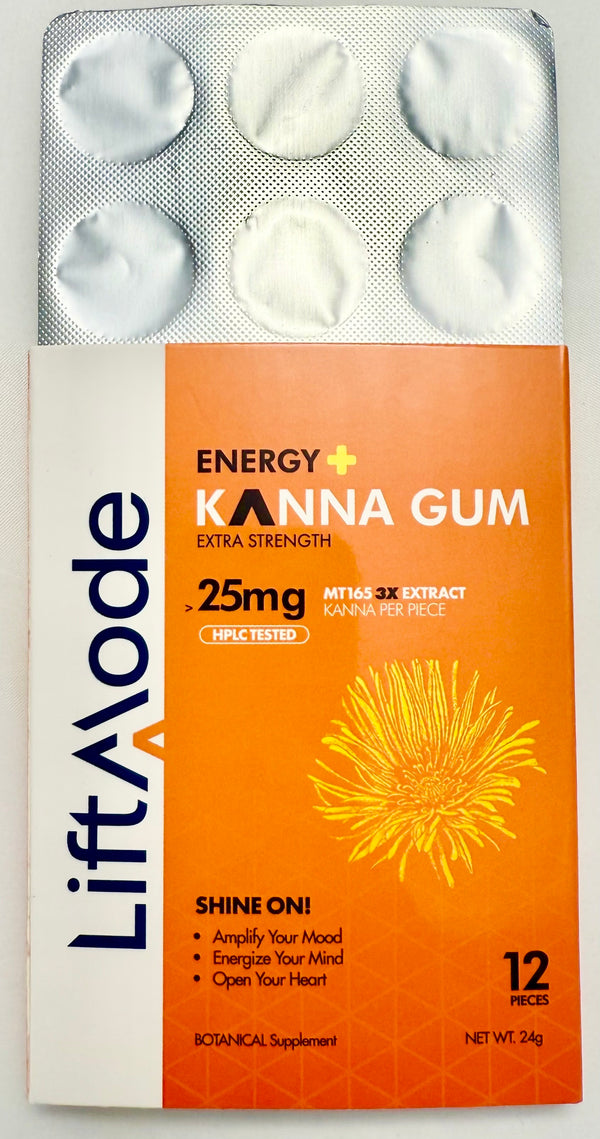
| Gum | Traditional-style, discreet, on-the-go | Fixed dose; slower onset |
Powder gives you the most control and the lowest cost per serving, and works quickly when taken sublingually. Capsules trade flexibility for grab-and-go convenience. The elixir is the easiest way to get fast, adjustable dosing without measuring powder. Gum echoes the traditional "chew" and is the most discreet.

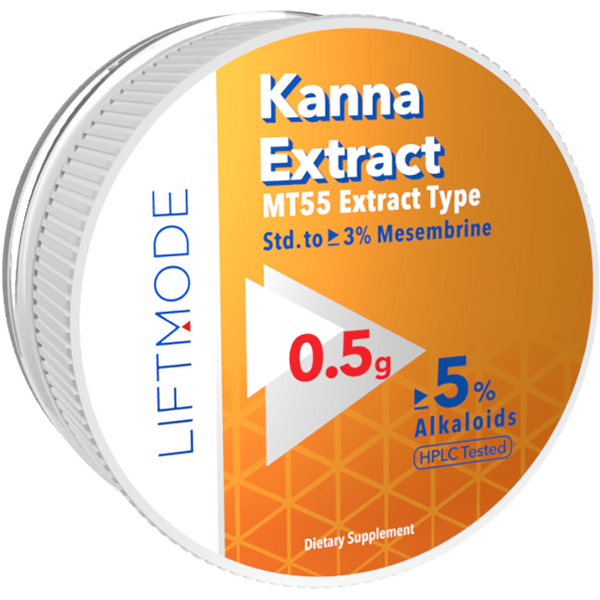
MT55 Extract
LiftMode's bestselling, mesembrine-rich extract — the standard entry point for most users.
Shop MT55 →
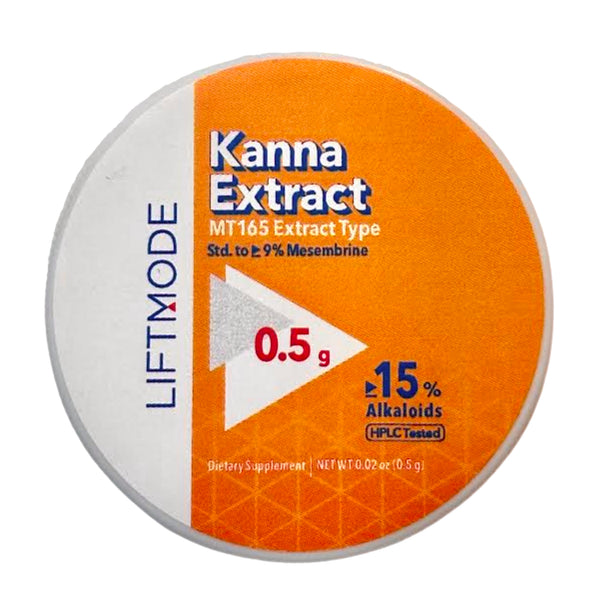
MT165 Extract
Higher total alkaloid content with more of the synergistic mesembrenone/mesembrenol blend.
Shop MT165 →
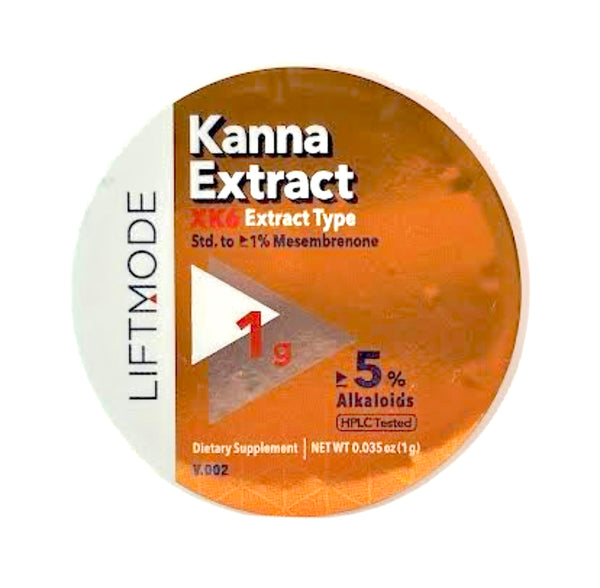
XK6 Extract
A different extraction method emphasizing certain alkaloid fractions, for experienced users.
Shop XK6 →Part 5: Dosage Guidelines for Kanna
Start low and build up — individual sensitivity to serotonergic compounds varies widely.
Recommended Starting Points
The start-low-go-slow approach. Begin at the low end for 5–7 days to learn your response, then adjust. Timing: because effects last roughly 3–6 hours and kanna is mildly activating, morning or early afternoon suits most people; later use can disturb sleep in sensitive individuals. Tolerance: many users take periodic days off (e.g., 2–3 per week) to keep effects consistent. Experienced users of powder extracts may go up to roughly 300mg per session, 1–3 times daily as needed.
Part 6: Safety, Side Effects, and Contraindications
Kanna is generally well tolerated, and the controlled trials above reported good tolerability [4][5]. Most people notice no side effects; when they occur they are usually mild — occasional nausea (more likely at higher doses or on an empty stomach), headache, or slight stimulation.
Safety Considerations
Do not combine kanna with serotonergic drugs. This is the one safety point that genuinely matters. Because kanna inhibits serotonin reuptake, combining it with SSRIs, SNRIs, MAOIs, or other serotonergic medications or supplements could, in theory, contribute to excess serotonergic activity. Avoid the combination unless a healthcare provider directs otherwise.
Extra caution advised: if you are pregnant or breastfeeding, have bipolar disorder, have a history of serotonin syndrome, or take any prescription medication, consult a healthcare professional first.
Habit formation: kanna is not known to be habit-forming and does not produce the tolerance-and-withdrawal pattern seen with some other "calming" supplements.
Part 7: How to Choose the Right Kanna Product
Work backward from your priorities:
- Want the strongest, most direct mood support at the best value? Start with MT55 powder — LiftMode's bestselling, mesembrine-rich extract.
- Want a broader alkaloid profile? Consider MT165, which carries higher total alkaloid content and more of the synergistic mesembrenone/mesembrenol blend.
- Prioritize convenience? Choose capsules or the elixir.
- New to kanna? Begin with MT55 powder at ~100mg on a low-obligation day, and give yourself a week before adjusting.
Part 8: Why Quality Matters — Third-Party Testing and Standardization
Kanna products vary enormously in real-world alkaloid content, and because the alkaloid ratio drives the experience, a mislabeled extract can feel like a completely different product.
LiftMode has tested every batch through independent, certified laboratories since the company's founding in 2010 — more than 15 years of third-party verification. For our kanna extracts, that testing confirms:
- Alkaloid content — actual mesembrine, mesembrenone, and mesembrenol levels
- Purity — screening for heavy metals, microbial contaminants, and residual solvents
- Identity — confirmation that the material is genuinely Sceletium tortuosum
We publish a Certificate of Analysis (COA) for every batch, so you can verify exactly what you are buying. Standardization then ensures that one batch performs like the next — consistent effects, predictable dosing, and results that match other users' experiences.
Part 9: Kanna vs. Other Options
Kanna vs. phenibut
Phenibut is a GABA-B compound used for calm and sociability, but it is well known for rapid tolerance, dependence, and difficult withdrawal, plus an uncertain regulatory status. Kanna is a useful alternative for people seeking social ease and calm without that tolerance-and-withdrawal pattern, with a clear botanical origin and centuries of traditional use behind it.
Kanna vs. prescription SSRIs
Kanna and SSRIs share a broad target (serotonin reuptake), but they are not equivalent and kanna is not a substitute for prescribed medication. Kanna acts more mildly, works within hours rather than weeks, and is paired with PDE4 activity. Anyone taking or considering an SSRI should work with their prescriber — and should not combine the two without medical guidance.
Kanna vs. other botanicals
- St. John's Wort — also serotonergic, but with significant, well-documented drug interactions (it induces liver enzymes that clear many medications). Kanna is generally considered easier to tolerate but shares the "avoid with serotonergic drugs" caution.
- L-Theanine — promotes relaxed focus without acting on serotonin; gentler, with fewer interactions, but less mood-forward than kanna.
- 5-HTP — a serotonin precursor (supply-side) rather than a reuptake inhibitor (demand-side); a different route to supporting serotonin.
Kanna's appeal is that it bundles mood support, stress/tension relief, social ease, and cognitive clarity into a single, well-characterized botanical.
Part 10: Frequently Asked Questions
Usually 30–60 minutes, peaking around 1–2 hours, lasting 3–6 hours.
Many people do; some prefer 3–5 days per week or periodic days off to keep effects consistent.
Kanna is not considered habit-forming and does not produce physical dependence.
No — kanna is not a controlled substance and its alkaloids are unrelated to commonly screened drugs.
Yes, with many non-serotonergic supplements (L-theanine, B vitamins, omega-3s). Avoid combining with SSRIs, SNRIs, MAOIs, or other serotonergic compounds without medical guidance.
Extracts concentrate and standardize the active alkaloids for consistent, precise dosing — which is what LiftMode offers.
In most countries kanna (Sceletium tortuosum) is sold legally as a dietary supplement and is not a controlled substance. Check your local regulations.
Conclusion: Is Kanna Right for You?
Kanna is a rare example of a traditional botanical whose proposed mechanisms — dual serotonin-reuptake and PDE4 inhibition — have been examined in controlled human research [1][2][3][4][5]. If you want gentle, natural support for mood, everyday stress, social ease, and mental clarity, it is well worth understanding.
Key takeaways:
- Kanna's effects come from mesembrine-type alkaloids acting through two complementary mechanisms.
- Human studies on standardized extracts support its mood, stress, and cognitive reputation, with good tolerability — while noting more research is still needed.
- Extract type (MT55, MT165, XK6) and the alkaloid ratio matter as much as the dose.
- Start low, time it earlier in the day, and choose third-party-tested, standardized products.
- The one safety rule that really matters: don't combine kanna with serotonergic medications without medical guidance.
Ready to start? LiftMode's bestselling MT55 extract powder is the most popular entry point, with capsules and elixir available if you prefer convenience — each backed by a batch-specific COA.
References
- Harvey AL, Young LC, Viljoen AM, Gericke NP. Pharmacological actions of the South African medicinal and functional food plant Sceletium tortuosum and its principal alkaloids. J Ethnopharmacol. 2011;137(3):1124–1129.
- Gericke N, Viljoen AM. Sceletium — a review update. J Ethnopharmacol. 2008;119(3):653–663.
- Terburg D, et al. Acute effects of Sceletium tortuosum (Zembrin), a dual 5-HT reuptake and PDE4 inhibitor, in the human amygdala and its connection to the hypothalamus. Neuropsychopharmacology. 2013;38(13):2708–2716.
- Nell H, Siebert M, Chellan P, Gericke N. A randomized, double-blind, parallel-group, placebo-controlled trial of extract Sceletium tortuosum (Zembrin) in healthy adults. J Altern Complement Med. 2013;19(11):898–904.
- Chiu S, et al. Proof-of-concept randomized controlled study of cognition effects of the proprietary extract Sceletium tortuosum (Zembrin) targeting PDE4 in cognitively healthy subjects. Evid Based Complement Alternat Med. 2014;2014:682014.
- Coetzee DD, López V, Smith C. High-mesembrine Sceletium extract (Trimesemine) is a monoamine releasing agent. J Ethnopharmacol. 2016;177:111–116.
Disclaimer: These statements have not been evaluated by the Food and Drug Administration. This product is not intended to diagnose, treat, cure, or prevent any disease. Always consult a qualified healthcare professional before beginning any new supplement, particularly if you are pregnant, nursing, taking medication, or have a diagnosed medical condition.

About LiftMode: LiftMode has been a trusted source for high-purity dietary supplements since 2010. Our commitment to independent third-party lab testing, alkaloid standardization, and honest customer education sets us apart, and every product ships backed by a Certificate of Analysis verifying quality, purity, and potency. Explore our full kanna range at liftmode.com.